Learning how to ride a motorcycle for beginners involves mastering several distinct skills that work together. Unlike cars where steering feels natural, motorcycles work differently and require building new habits. This guide breaks down the essential techniques every new rider needs.
Before learning technique, what is a good beginner motorcycle matters significantly. New riders should start with bikes in the 300-650cc range that offer manageable power without being intimidating. Lighter bikes with lower seat heights allow easier control at stops and during slow-speed maneuvers.
Popular options include standard motorcycles, small cruisers, and adventure-style bikes with upright seating and predictable handling. Avoid supersport bikes or heavy touring motorcycles until you’ve developed fundamental skills.
Motorcycles have five primary controls. The throttle on the right handlebar controls acceleration by twisting toward you. The front brake lever, also on the right, operates your primary stopping power. The clutch lever on the left disengages the engine from the transmission, allowing you to shift or stop without stalling.
The gear shifter sits under your left foot, with first gear down and higher gears up. The rear brake pedal under your right foot provides supplementary braking.
Mastering how to shift gears on motorcycle represents one of the first major hurdles. The process involves coordinating clutch, throttle, and shifter in a smooth sequence.
To upshift, roll off the throttle slightly while pulling in the clutch lever completely. Press the shifter up one position, then smoothly release the clutch while rolling the throttle back on. The key is smooth clutch release, not abrupt letting go that causes jerky acceleration.
Downshifting requires similar coordination in reverse. Roll off throttle, pull clutch, press shifter down one gear, release clutch smoothly. As you advance, adding slight throttle during clutch release creates smoother downshifts.
The friction zone represents the clutch lever’s mid-point where it begins engaging. Think of it like a dimmer switch for your headlights rather than a simple on/off switch. Pull the clutch in completely, select first gear, then slowly release until you feel the bike want to move forward. That’s your friction zone. Practice finding this sweet spot to develop precise control.
Common mistakes include releasing the clutch too quickly, which causes jerky movement or stalling; forgetting to pull it in completely before shifting, which creates grinding; and holding it in the friction zone too long, causing premature wear.
Understanding motorcycle countersteering revolutionizes how to turn on a motorcycle. This technique feels backwards at first but it’s simply how motorcycles turn once you’re moving at normal speeds.
To turn right at speeds above 15 mph, push forward on the right handlebar. Yes, you push on the same side you want to go. This makes the bike lean right, and leaning creates the turn. To turn left, push forward on the left handlebar. Remember: push right to go right, push left to go left.
At parking lot speeds below 15 mph, traditional steering applies. You turn the handlebars where you want to go. But at street speeds, countersteering takes over as the primary turning method.
Here’s what happens: pushing forward on one side makes the bike tip in that direction. Once the bike leans, it naturally follows the curve. Trying to turn just by leaning your body doesn’t work. You need that handlebar push to start everything.
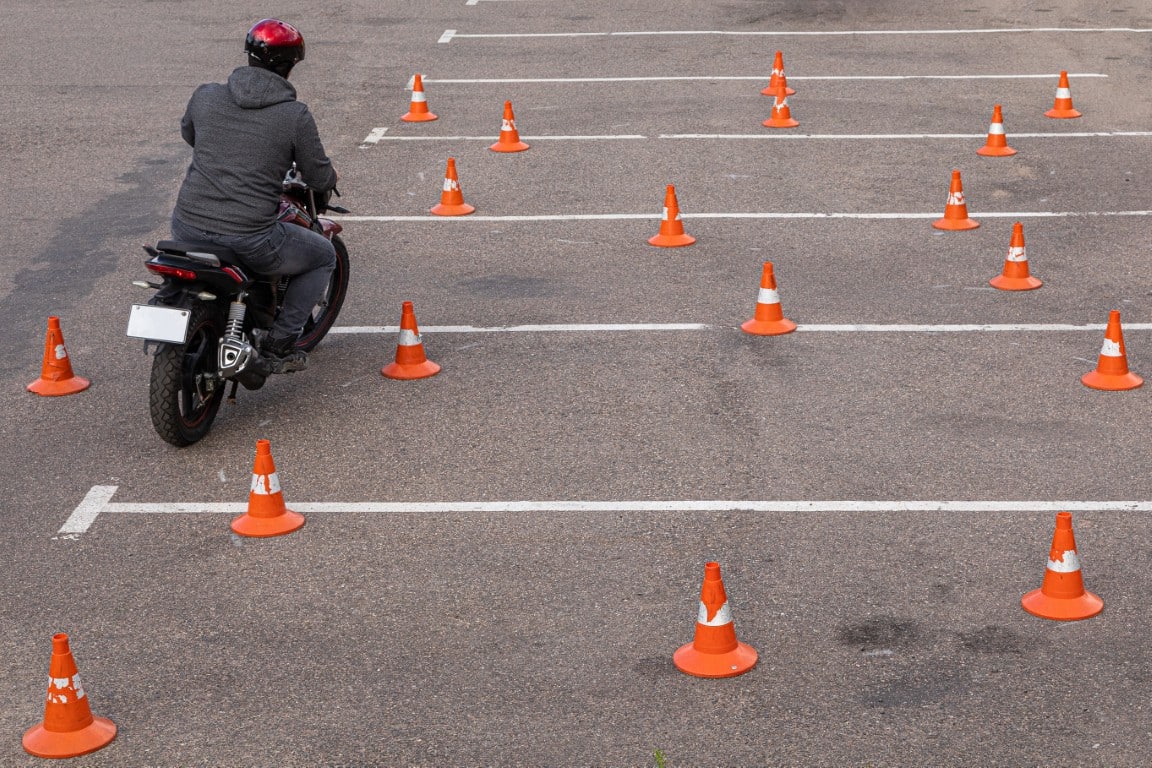
New riders often resist countersteering because it feels wrong initially. Practice in empty parking lots by deliberately pushing the handlebars at moderate speeds. You’ll discover how much easier and more precise turning becomes. The harder you push, the faster the bike leans and the tighter it turns.
Looking through turns matters just as much as the handlebar push. Focus on where you want to exit the turn rather than staring at obstacles. Your body follows your eyes, so this visual technique combined with countersteering creates smooth, confident corners.
Effective motorcycle braking technique relies primarily on the front brake, which does most of the stopping work. The front brake lever should be squeezed smoothly rather than grabbed suddenly. Start gentle and squeeze harder gradually as the bike slows down.
New riders often rely too heavily on the rear brake at first because it feels less intimidating than the front. Apply it smoothly with your right foot without locking up the wheel, which causes skidding. Modern bikes with ABS prevent wheel lockup automatically, making emergency stops easier for beginners.
Practice emergency braking in empty parking lots. From 20-30 mph, squeeze both brakes firmly and progressively. Knowing how your bike stops before you need it in traffic builds confidence.
Most beginners struggle with smooth clutch release long before they struggle with speed. Consider taking a Motorcycle Safety Foundation course that teaches you in a safe environment with professional instructors. These courses teach correct techniques from day one.
Before each riding season, especially after winter storage, make sure your motorcycle works properly. Pre-season inspection services check that throttle, shifting, and brakes all respond correctly, so the bike behaves predictably as you get back into riding after months off.
Practice in empty parking lots regularly, even after you get comfortable. Work on slow turns, quick stops, and smooth shifting. The more time you spend practicing, the more natural everything becomes.
Your riding skills improve gradually with every ride. Focus on mastering the basics, practice deliberately, and your confidence will grow naturally over time.

