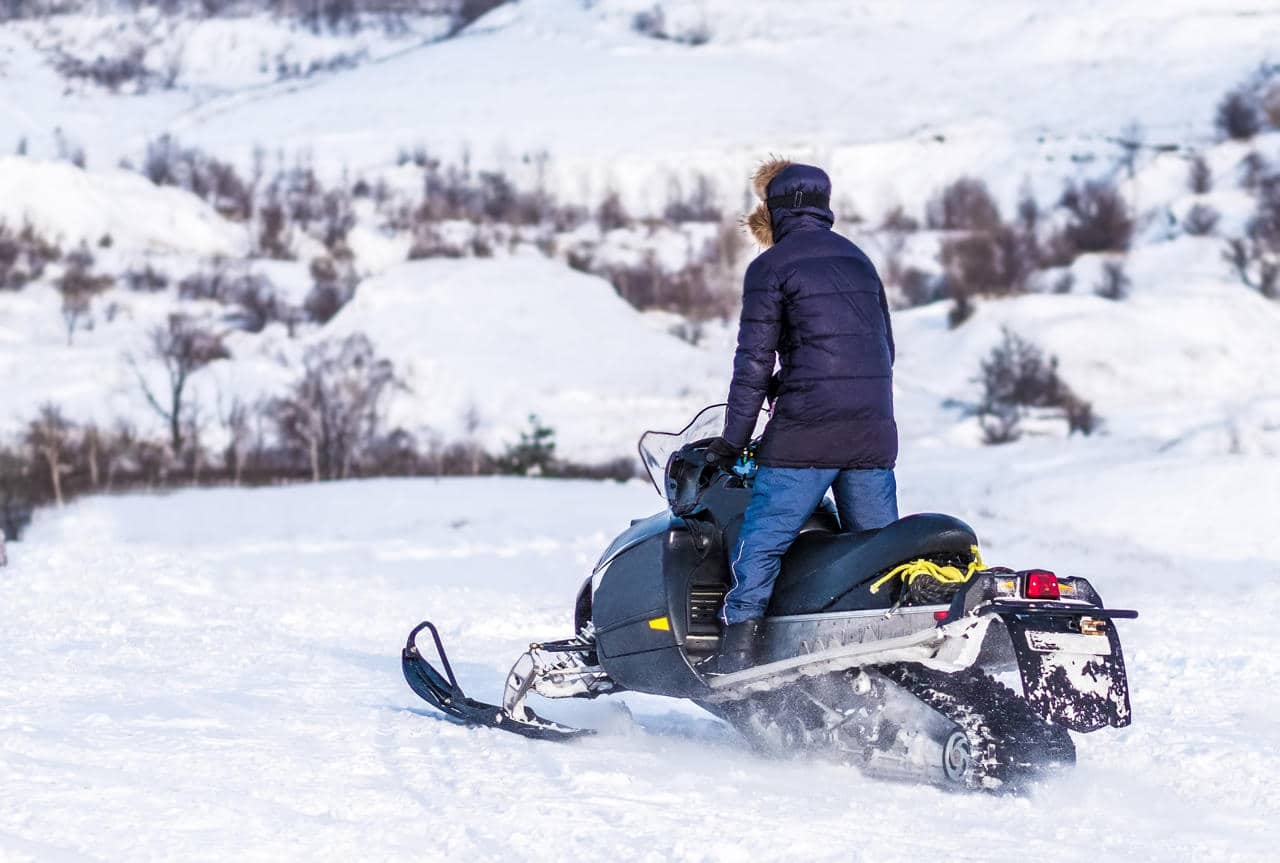
Shopping for a used snowmobile in the off-season means inspecting a machine that can’t safely run far on bare ground. Polaris warns that driving in too little snow will damage the slide rails, track, and engine, and BRP says snow-free surfaces compromise engine cooling. With a real test ride off the table, the work starts with a phone call and ends with the paperwork.
A few questions by phone can save a wasted trip:
Ask how the seller prepared the snowmobile for storage. Did they treat the fuel, protect the engine, or drain the carburetors if the model requires it? Stale fuel and blocked carburetors rank among the most common snowmobile problems, so the answer tells you how the sled spent its summers.
Touch the cylinders and exhaust pipe the moment you arrive. Warm metal means someone started the sled ahead of time, which can hide a hard cold start.
Next, find the vehicle identification number. Ski-Doo stamps it into the right side of the tunnel, and Polaris adds a tunnel label beside its stamped number. Match it against the paperwork before going further. A scratched or altered VIN is a serious red flag, and Michigan treats possessing a sled with a defaced number as a misdemeanor.
Two quick lookups follow:
Have someone raise the rear of the sled, then turn the track slowly by hand. Polaris tells owners to inspect each rod along its full length and replace any track with a damaged rod. Torn windows or exposed internal structure mean the track has reached the end of its life.
While the track turns, study the parts around it:
On the shocks, look for corrosion, dents, and fluid around the seals, since heavy wetness can signal a failing seal. Fluid puddles beneath the machine deserve a question too.
Bent skis mean you are paying for a new pair. A carbide runner needs replacing once any carbide insert is missing or worn down to roughly half its original diameter. The safety-critical checks follow:
Pull the drive belt cover and examine the belt. Separation, glazing, frayed edges, missing cogs, or narrowing all signal heavy wear. The clutch sheaves that grip it should look clean, not scored or caked with debris. The throttle lever should move freely and snap back to idle on its own.
The lubrication checks depend on the engine type:
A compression reading can uncover worn piston rings or cylinder damage, especially on two-stroke engines. Follow the procedure specified for that exact engine model, disabling ignition or fuel as directed, and cranking until the reading stabilizes. Compare the results with the manufacturer’s specification when one exists. On multi-cylinder engines, readings within roughly 10% of each other are a good sign, but no single psi number can judge every snowmobile engine.
Compression readings miss some problems. A snowmobile repair shop may use a cylinder leak-down test to evaluate combustion-chamber sealing. On applicable two-strokes, a separate crankcase pressure-and-vacuum test checks for leaking seals and gaskets.
Once the engine fires, pull the tether cord. Ski-Doo’s checklist says the engine should cut off immediately. Restart it and listen for knocking, rattling, or a rough idle, all among the warning signs of a sled that needs repair. While it runs, try the headlight, taillight, gauges, reverse, electric start if equipped, and any warning indicators.
A brief startup reveals plenty, so the track rarely needs to spin. Any powered check should follow the manufacturer’s procedure on a secured stand, and everyone needs to stand clear of the moving track. Open the throttle gently rather than revving the engine.
Chicago-area riders tend to cross state lines, so the documents span more than one state:
Before any money changes hands, confirm that every document needed for registration is in hand. Settle any missing or inconsistent records first. The three states set these fees themselves and adjust them periodically, so confirm the amount before you pay.
A used snowmobile tells its story through small clues long before it touches snow. Worn rails, warm cylinders, uneven compression, or missing paperwork each change the price or the decision.
A buyer who works through the visit in order can walk away from a bad deal early. The same approach lets a good deal close with a clear picture of what comes home on the trailer.

