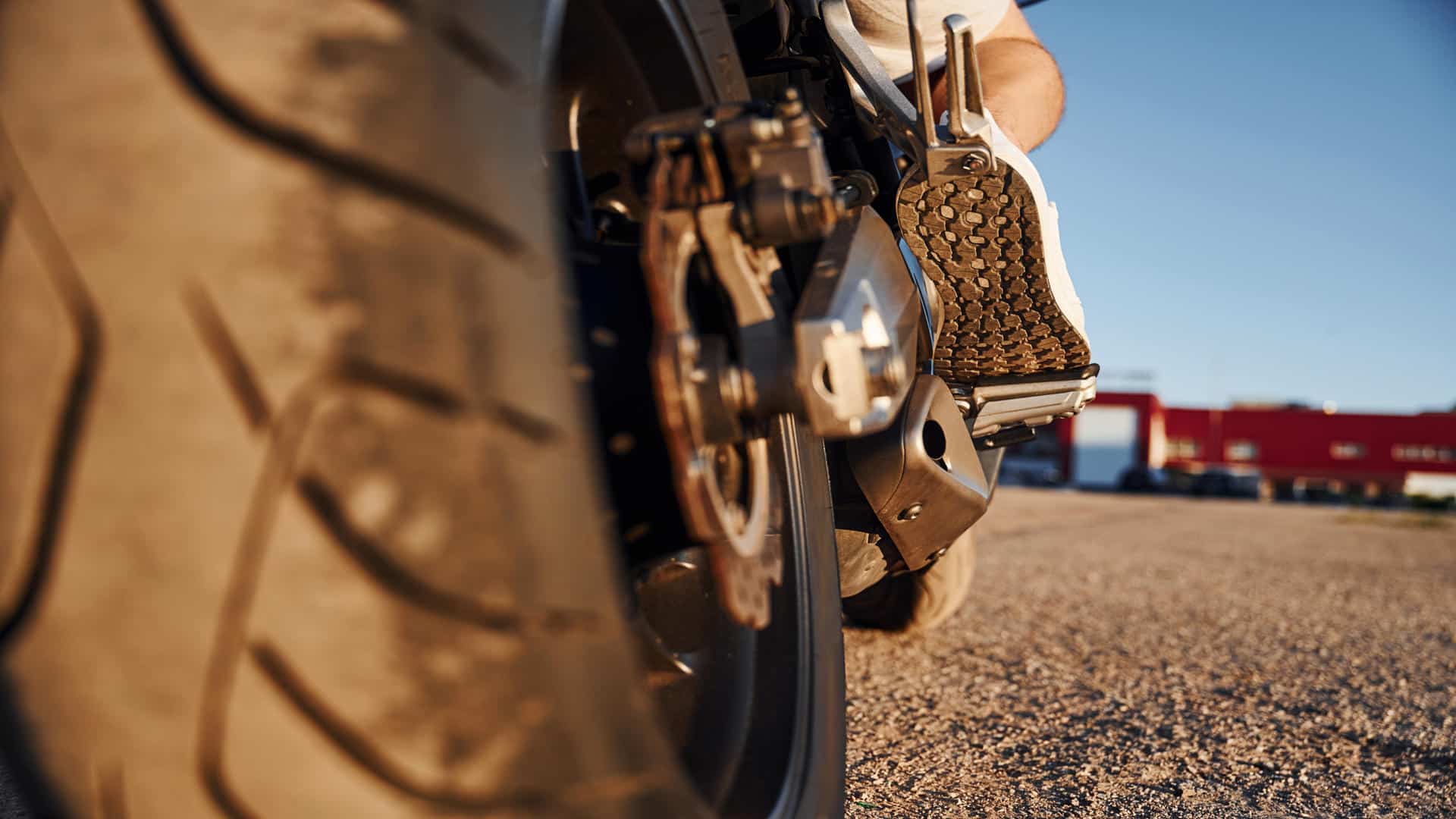
Brakes are the one system on a motorcycle where guessing has real consequences. Let pads wear beyond their service limit, and the consequences can move beyond the pads themselves: braking performance can deteriorate, and the backing plate can damage the rotor. The good news is that pads rarely fail out of nowhere. They warn you through sound, feel, and a few things you can see, as long as you know what to look for.
Most riders notice a problem by sound and feel long before ever looking at the pads. Four cues matter, and each one tells you something slightly different:
Whatever you do, don’t drown these out with a louder exhaust. A brake that talks to you is doing you a favor.
Sound gets your attention. A quick visual check settles the question. On most bikes, the pads sit in plain view through the caliper or between the spokes, so a flashlight and thirty seconds are usually all it takes.
You’re looking for two things. First, the thickness of the friction material. A fresh pad carries several millimeters. Compare the remaining friction material with the service limit in your owner’s manual or service manual. If you cannot confirm the specification, don’t guess from a generic number; many pads also use grooves or other wear indicators to show when replacement is approaching. Around 2 mm can be a useful early-warning threshold on some applications, but it is not a universal motorcycle specification.
Second, the wear indicator groove is a channel molded into many pads. While you can still see it, there’s life left. Once it wears flush and disappears, the pad has reached its limit.
One habit saves a lot of grief: check the front and rear separately. They almost never thin at the same rate. Since the front brake does most of the work on a motorcycle, those pads tend to vanish first. While the wheel is in front of you, glance at the tire too and check its overall tread condition for signs that it may need attention.
Not every clue is loud. A few subtler ones tend to slip past until the damage is well along. A sudden change in how much dust collects on the wheel or caliper is worth noting, though the amount on its own tells you little, since sintered, organic, and ceramic compounds all shed at different rates. What matters is the change from what that bike normally produces.
A fluid level that drops with no leak in sight can reflect the caliper pistons reaching further to meet worn pads. And a faint burning smell after hard braking points toward glazing. Under sustained heat, the friction surface hardens and goes smooth, almost glass-like, and two glassy surfaces pressed together grip poorly and squeal. Glazed pads feel wrong long before they run out of material, which is why thickness alone never settles the question.
Any one of these might mean little on its own, though the burning smell earns a look by itself. Two or three showing up together is a clear cue to stop and inspect the brakes properly.
It’s tempting to squeeze a few more weeks out of a set of pads, especially mid-season, but the math rarely works in your favor. Once the friction material runs out, the bare metal backing plate grinds straight against the rotor, scoring or warping it. Replacing worn pads generally costs far less than replacing pads and a damaged brake disc.
The safety cost is quieter but bigger. Fresh pads bring back the bite you’ve been missing, and the difference is obvious the first time you grab the lever after a change. That sharp, predictable response is exactly what saves you when a car pulls out, something every city rider learns to anticipate early.
Pads thin at different speeds depending on how and where you spend your saddle time, so no single mileage number fits everyone. A rough rhythm keeps you ahead of trouble:
The underlying rule is simpler still: the more you use the brakes, the sooner you look at them. A canyon carver and a daily commuter can put identical miles on a bike and wear their pads at completely different rates.
Plenty of riders swap pads in the garage, and there’s real satisfaction in doing it yourself. Some situations, though, call for trained hands. A grinding noise may already have scored the disc. A spongy lever can hint at air in the lines. Uneven wear usually means a sticking caliper piston. Each of those points to a problem a fresh set of pads alone won’t solve.
So if anything about your brakes feels off, it’s worth having a professional look. A motorcycle brake pad replacement done at a shop also includes measuring the remaining material and checking the rotor for damage. That’s how a sticking piston or a warped disc gets caught early, not after it spreads. Either way, the takeaway is the same. Read the signs early and act on them.

