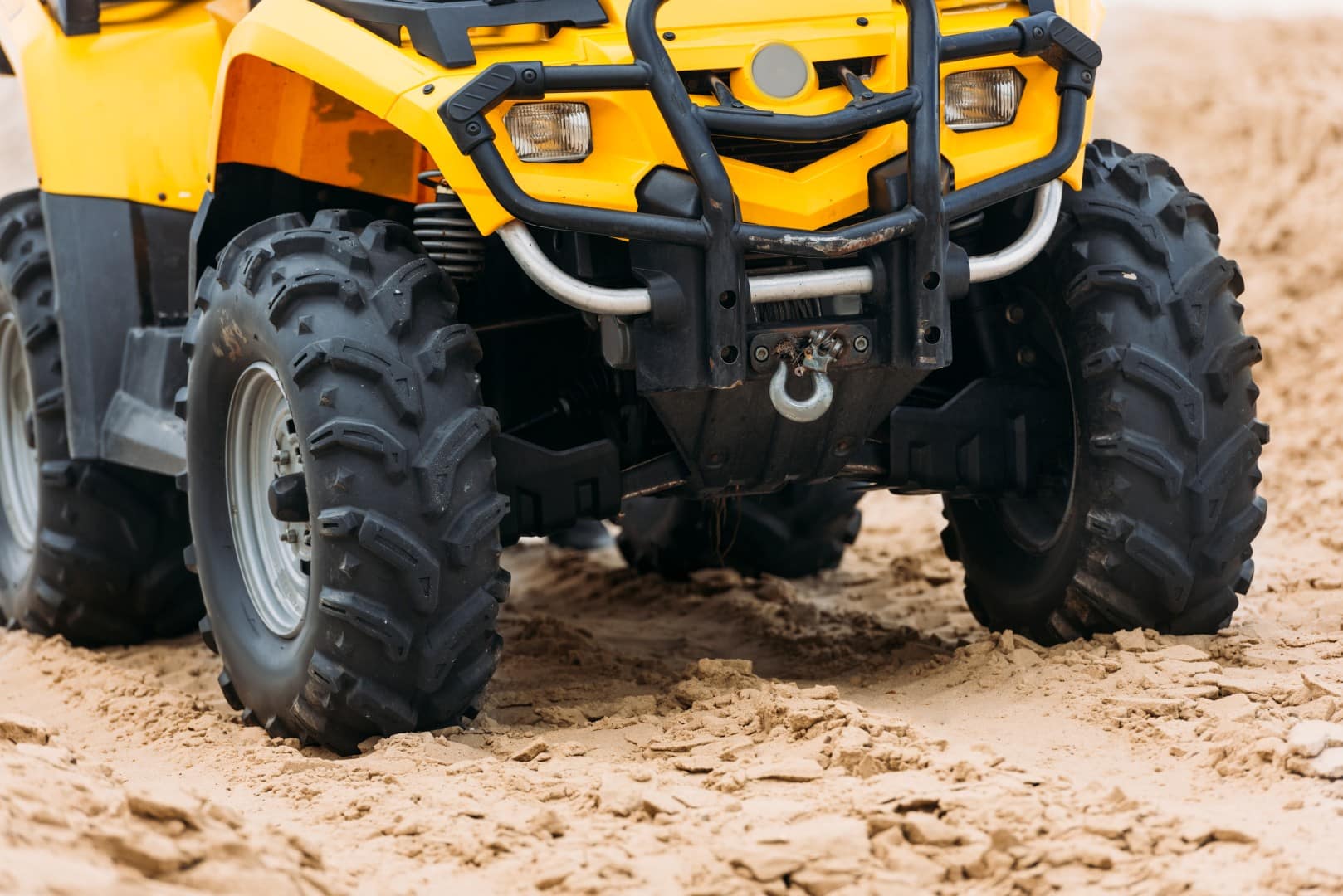
Most people shopping for an off-road machine quickly ask: what is an ATV, what is a UTV, and does the distinction actually matter? The answer is yes, more than most first-timers expect. These machines share terrain but operate on completely different principles, and the choice affects everything from how physically demanding the experience is to whether you can legally access the trail you had in mind.
The ATV does not do the riding for you. ATV stands for all-terrain vehicle, and the relationship between rider and machine is physical from the first minute: you straddle a seat, steer with handlebars, and your body does a lot of the work. Weight back on descents, outside foot in turns, stand up when the ground gets rough. Beginners who white-knuckle the bars and sit stiff get reminded of this immediately, which is one reason the ATV Safety Institute runs a hands-on RiderCourse covering exactly these fundamentals.
Most ATVs seat one rider, though two-up models exist. Width-wise, 50 inches is a reasonable reference for many machines, though full-size models can run wider. That number becomes especially relevant the first time you pull up to a trail gate with a 50-inch restriction, and the person behind you in the UTV has to turn around.
Snow plow blades, sprayer attachments, and pull-behind implements are common add-ons, and the lighter footprint pays off anywhere the ground is soft. Less weight means more options when conditions get bad.
UTV stands for utility task vehicle and is often used interchangeably with side-by-side in consumer and dealer use. If you’ve driven a car, you already know the controls: steering wheel, foot pedals, seats next to each other. What takes some getting used to is the scale of everything else.
These machines are built to carry: people, gear, cargo, and whatever you’d otherwise be bungee-cording to an ATV rack. Depending on the model, that means two to six occupants, a cargo bed rated up to 1,000 pounds on heavy-duty units, a roll-over protective structure, and integrated seatbelts or full harnesses on most. That’s why contractors, large farm operations, and hunting outfitters reach for a UTV when clients, tools, or field-dressed animals are involved.
The tradeoff is size. UTVs range from around 50 inches on compact Can-Am models to 74 inches or more on sport-oriented Polaris machines. Many Forest Service OHV routes cap vehicle width at 50 inches on ATV-designated trails, which cuts off most UTVs from a large portion of those trails. Illinois writes that directly into law: ATVs are defined as 50 inches or less. So, a machine marketed as a UTV or side-by-side may therefore fall into a different legal category from an ATV.
For Chicago-area riders, Rocky Glen OHV Park in Rockford (90 minutes northwest), The Cliffs in Marseilles (just over an hour west), and Badlands Off Road Park in Attica, Indiana (just over two hours out) each have their own width rules. Check your machine’s width against the specific site before you show up.
| Feature | ATV | UTV |
| Seating | Straddle seat | Side-by-side seats |
| Steering | Handlebars | Steering wheel and pedals |
| Passengers | Usually one (some two-up models) | Multiple occupants on most models |
| Typical width | ~50 inches (full-size can be wider) | 50–74+ inches |
| Cargo | Racks, varies by model | Cargo bed, up to 1,000 lbs |
| Trail access | Better for width-restricted trails | Needs wider clearances |
| Rider protection | More exposed | ROPS and restraints on most models |
If the day involves one rider and a narrow trail, the ATV is hard to beat. Add three people, tools, a cooler, and something heavy that needs to come back out of the woods, and the argument changes fast. UTVs take over there: the cargo bed, the passenger capacity, and the ability to unload with the whole crew still seated make the size worth it.
Farm operations split the same way. Tight row access and single-person tasks lean ATV. Crew logistics, large loads, and equipment transport between structures call for a UTV. Larger spreads tend to run both, which makes fleet maintenance for mixed lineups a category of its own.
One thing new buyers consistently underestimate: a UTV needs a wider trailer, more parking space, and often a heavier tow vehicle. Factor that into the budget before the purchase, not after.
ATVs are not built for extra passengers. If the machine was built for one rider, a second person changes how it balances and turns in ways the frame was not designed for. CPSC data shows that when an incident occurs on a single-rider ATV with a passenger aboard, the passenger is disproportionately likely to be the one who gets hurt.
UTVs distribute protection differently: occupants are strapped into a ROPS cage rather than actively correcting the machine’s behavior. That doesn’t make them inherently safer. They roll too, and a rollover in a UTV is not a minor event. At Illinois DNR OHV sites, helmets are required unless the machine has a fully enclosed metal cab or roll bar protection with seatbelts; riders under 17 face additional age and supervision requirements on top of that.
Either machine pushed hard through a full working season puts real hours on the engine fast. Belt wear and cooling stress show up sooner than most buyers expect, and engine rebuilds are a regular part of the maintenance picture for anyone running one hard.
| Pick an ATV if… | Pick a UTV if… |
| You mostly ride alone | You regularly bring people with you |
| Narrow trails matter | Cargo and seating matter more |
| You want something easier to store and transport | You have room for a larger machine and trailer |
| You like active riding | You prefer car-like controls |
| Tight access beats comfort | Longer days and heavier jobs are the priority |
For most buyers, the decision comes down to one question: are you riding alone or bringing people? Solo riders on varied terrain almost always get more out of an ATV. Anyone who regularly moves a crew, hauls gear, or spends full days in the field will outgrow an ATV fast.
The wrong choice usually becomes obvious after the purchase, when the ATV has nowhere for the second passenger or the UTV won’t fit through the trail gate. Figure out where you ride, who comes with you, and what you actually carry before horsepower enters the conversation.

