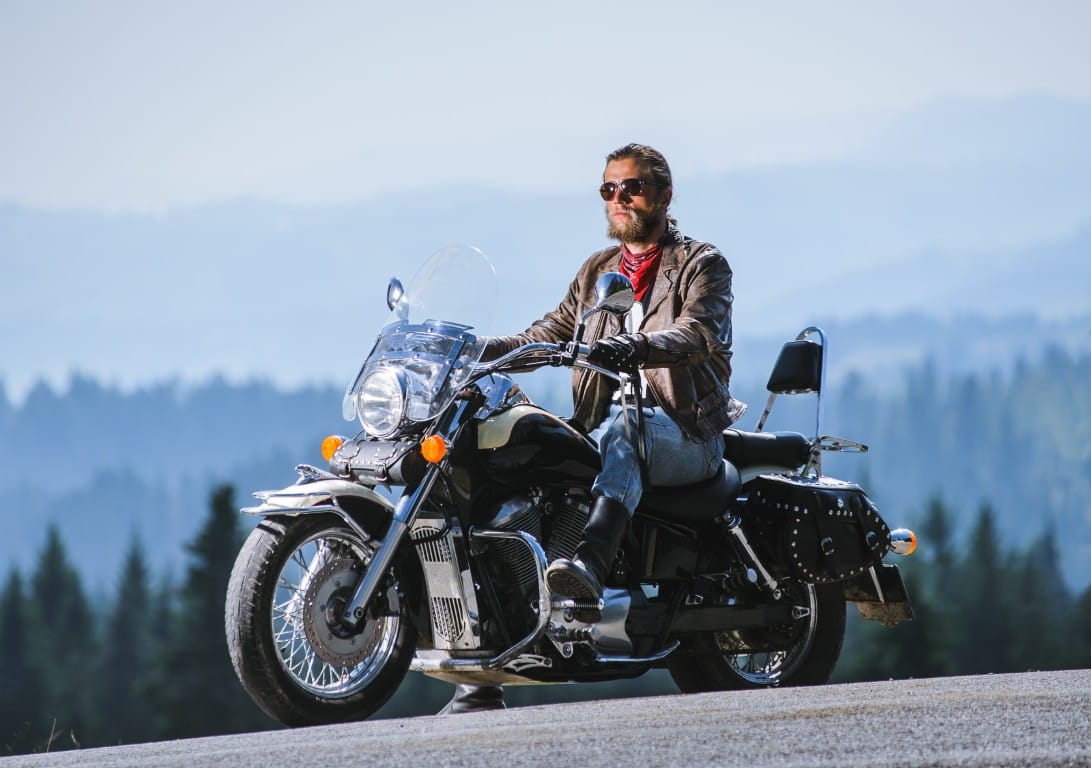
Before most new riders think about brand, engine size, or budget, they face the same decision: sport bike or cruiser motorcycle. The cruiser vs sport bike debate comes up for good reason: the two types pull in opposite directions in almost every meaningful way, from ergonomics to engine character to running costs. Those differences show up immediately in how you sit, and they compound over time in how your body holds up, how much you spend on upkeep, and how well the bike fits the riding you actually do.
| Feature | Cruiser | Sport Bike |
| Riding position | Upright, feet forward | Forward lean, rear-set pegs |
| Seat height | 25–28 inches | 30–33 inches |
| Engine type | V-twin, low-rev torque | Inline-four, high-rev power |
| Best for | Long rides, casual touring | Twisty roads, track days |
| Beginner friendly | Generally yes | Depends on displacement |
| Maintenance cost | Lower | Higher |
A cruiser motorcycle is built around a relaxed posture: a low seat, relaxed steering geometry, and foot controls that range from mid-mounted to pronounced feet-forward depending on the model. The style traces back to American V-twin designs of the mid-20th century and the basic formula has not changed much. These bikes emphasize usable torque at lower engine speeds rather than peak high-rpm output, offering strong, accessible pull at moderate throttle. The result is a platform that rewards smooth riding over aggressive inputs, and tends to feel most at home on open roads rather than tight corners, though the degree varies considerably between models.
A sport bike takes its design cues from racing. The rider generally sits higher and farther back on the footpegs than on a cruiser, with a degree of forward lean that varies significantly by model. Street-oriented and entry-level sport bikes may feel relatively neutral, while full supersports place the rider in a much more compact, aggressive position. Engines range from approachable parallel twins on smaller models to high-revving inline-fours and V4s on performance machines, all tuned to deliver power higher in the rev range than most cruisers. Narrow fairings, short wheelbase, and responsive geometry make these bikes feel alert in corners in a way a cruiser simply does not.
What the definitions do not capture is how each position feels after two or three hours on the road. A cruiser’s upright posture reduces wrist and knee bend, but a pronounced feet-forward position can place more load on the lower back and tailbone, especially over rough pavement where the legs provide less support. An aggressive sport bike posture concentrates fatigue in the wrists, neck, and hips, particularly in slow traffic where there is no wind resistance to help support the upper body.
Neither category guarantees comfort. Fit depends on the individual motorcycle, the rider’s proportions, and how the seat, bars, and footpegs align together. Seat height is a related factor with real daily consequences: cruisers typically sit between 25 and 28 inches, sport bikes often run 30 to 33. But a narrow 31-inch seat may be easier to reach around than a wide 28-inch seat, and a lighter motorcycle can feel less intimidating even when it sits higher. The useful question is not which posture is more comfortable in the abstract, but whether that specific motorcycle’s geometry works for your body across the rides you take.
The most extreme motorcycles in either category tell a new rider very little about the decision they are actually making. A full supersport and an entry-level sport model may share the same bodywork but sit in completely different categories for power, ergonomics, running costs, and intended use. The same applies across the cruiser range.
A more useful comparison pairs motorcycles at a similar price and experience level. Sit on each one long enough to check whether the handlebars, footpegs, and controls are reachable without strain, whether the weight feels manageable coming off the side stand, and whether ABS is fitted. Those factors determine whether the first season builds skill or tests patience, which matters more than what either category can do at its limit.
Neither a cruiser nor a sport bike is automatically the easier first choice. A low cruiser seat can build confidence at stops, but heavier models with long wheelbases can be slow to maneuver in parking lots. A lightweight sport bike may sit higher yet feel easier to balance and steer at low speed. The more useful filter is the specific motorcycle: manageable power, predictable controls, available ABS, reasonable weight, and ergonomics that fit your body. Getting proper instruction through a beginner course before buying gives you a controlled environment to test what actually works for you. Reasonable starting points from both sides include:
Some riders feel pressure to move up in displacement quickly. Before making a large jump in performance, assess braking, cornering, and low-speed control skills honestly rather than measuring comfort by straight-line acceleration alone.
In dense traffic, lighter sport bikes can feel responsive and easier to filter through gaps, but aggressive ergonomics, limited steering lock, and heat from high-output engines can become tiring over a long commute. Cruisers often offer calmer throttle response and a lower seat that helps at frequent stops, while greater weight and wheelbase make parking and U-turns more deliberate. For a daily commuter, the question is not which is more capable on open roads, but which trade-offs are manageable when the ride is not optional.
Running costs depend more on the specific motorcycle than on whether it is called a cruiser or sport bike. A small parallel-twin sport model can be inexpensive to service and insure. A large, highly equipped cruiser with liquid cooling, variable valve timing, and elaborate bodywork may cost significantly more. Before buying, check the individual model’s:
The badge on the fuel tank matters less than the maintenance schedule and parts prices attached to it.
Long highway miles and a relaxed pace suit many cruisers. Twisting roads, performance-focused riding, and track days suit many sport bikes. Category narrows the search. The individual motorcycle determines whether the choice actually works. The decision comes down to being clear-eyed about how you actually spend time on the road, not how you imagine you might.

