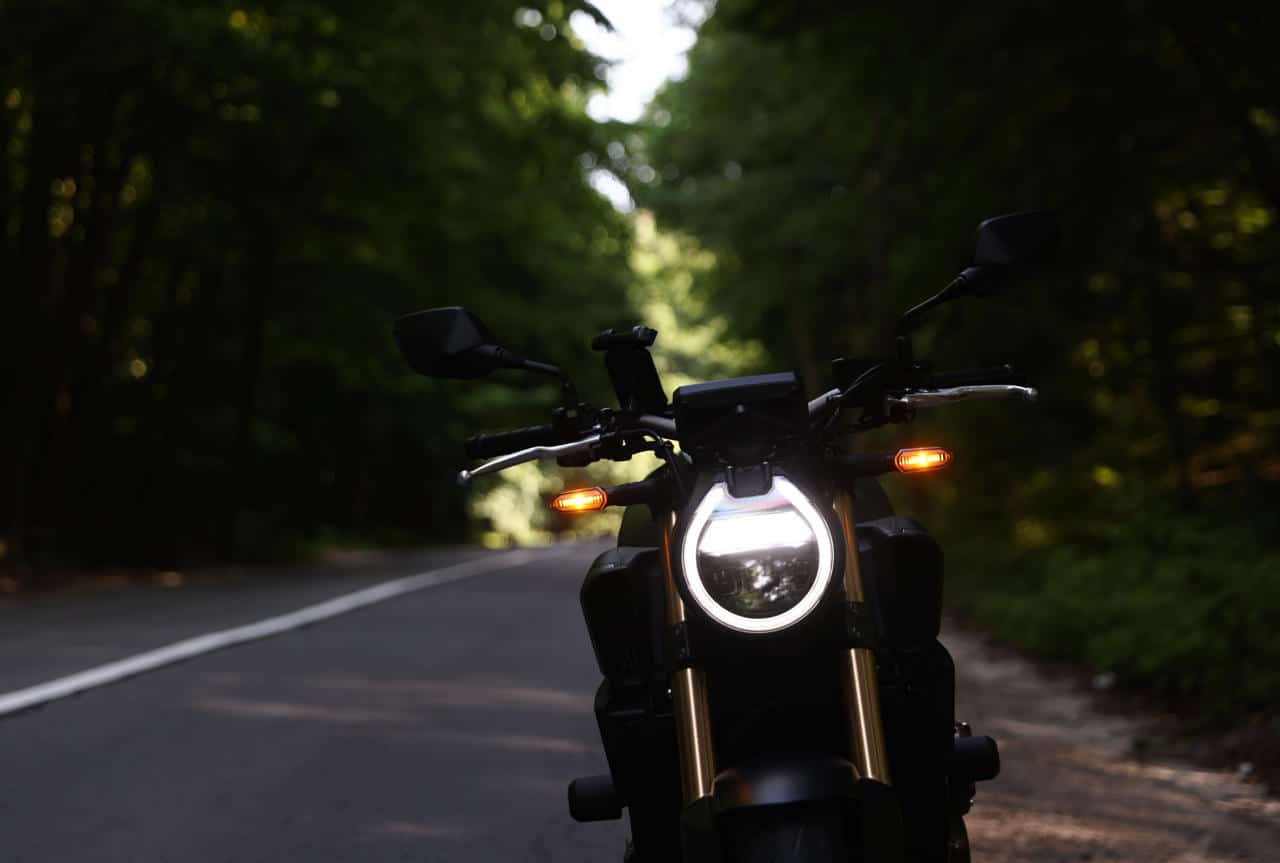
Every motorcycle light has two audiences. One sits in the saddle and needs to see the road. The other sits behind a windshield, deciding whether there’s room to turn left across the motorcycle’s path.
A good upgrade serves both. It lets the rider spot hazards sooner and makes the motorcycle more noticeable to others. It also avoids blinding oncoming drivers or overloading the charging system.
Most upgrades begin with the main headlight. Riders usually weigh two options here, and they differ sharply on legality.
An LED bulb that drops into a halogen housing looks like the easy fix. NHTSA has stated in an interpretation letter that no LED light source may currently go into a replaceable bulb headlamp. That leaves the plug-in versions outside the federal lighting standard.
NHTSA does not regulate the changes an owner makes to their own motorcycle, so state law decides whether the swap is legal. Illinois permits installing only headlamps that meet U.S. Department of Transportation rules and emit white, yellow, or amber light, so a swap still raises a legal question.
Repair shops can’t legally install those bulbs, since federal law bars them from making compliant safety equipment noncompliant.
A full LED headlight replaces the optics and light source, which meet the standard as one unit. The lens should bear the DOT symbol, the maker’s name, and a part number. That mark reflects the manufacturer’s own certification, not a government approval.
Two examples show how much fitment matters:
Brightness figures alone don’t describe road performance, so beam pattern and fit deserve equal weight.
Auxiliary lights come in two main types. One reaches farther, while the other covers a wider area closer to the bike.
On unlit roads, driving lights add reach. SAE classifies them as auxiliary high beams, so the same switching rules apply to them. They suit dark rural stretches with light traffic.
Fog lamps follow their own SAE standard, J583. Their wide, low beam limits the glare that bounces back from mist or spray. Denali rates a pair of its D3 fog pods at 450 feet of reach and a 300-foot spread, measured at a 1-lux threshold. The SAE J583 certification covers the clear lens only, and the amber and selective-yellow versions do not carry it.
Harley-Davidson and Denali both describe the same wall test, and the headlight gets aimed before the auxiliaries:
Visibility research points in a consistent direction, though it stops short of proof. The Hurt Report, a landmark federal crash study, found headlights on in about 32% of daylight crash cases. A roadside sample of motorcycles put the figure near 61%. Those numbers reflect older bikes and traffic conditions.
A later Auckland study in the BMJ linked daytime headlight use to lower odds of crash injury. The result was borderline in statistical terms, so it calls for cautious reading.
Two additions may make a motorcycle easier to pick out:
Several Illinois provisions cover added lights:
Since one provision can allow a lamp that another restricts, check each kit’s classification and switching before combining them.
The J.W. Speaker 8790 draws 2.9 amps on high beam, and each Denali D3 pod draws about 3.3 amps at 40 watts. Together, that headlight and two pods add up to roughly 9.5 amps before ignition, fuel injection, or heated grips.
A charging system already near its limit can fall behind, and a battery that dies again and again is one possible result. Check charging voltage with the new lights on, at idle and at city speeds, to see whether enough reserve remains.
A safe installation follows a clear sequence:
A shop that specializes in lighting and wiring integration routes the new harnesses and switches through the bike’s existing layout, so nothing hangs loose or chafes.
Aftermarket LED turn signals should carry a DOT marking. Because they draw less current, they can trigger rapid flashing or bulb-out warnings. An LED-compatible flasher relay, an electronic controller, or load resistors can solve that, and the fix varies by motorcycle. Resistors run hot, though, and need mounting away from plastic. On some BMW models, accessory controllers connect added lights to the factory CAN-bus system.
A brighter headlamp isn’t automatically a better one. A compliant LED assembly, well-aimed fog lights, and carefully chosen driving lights each solve a different problem. The right mix depends on the roads you use most and what the charging system can carry.
Legal details weigh as heavily as the hardware. Matching markings, fitment, mounting position, and switching to Illinois motorcycle laws turn a bright idea into a street-legal upgrade.

