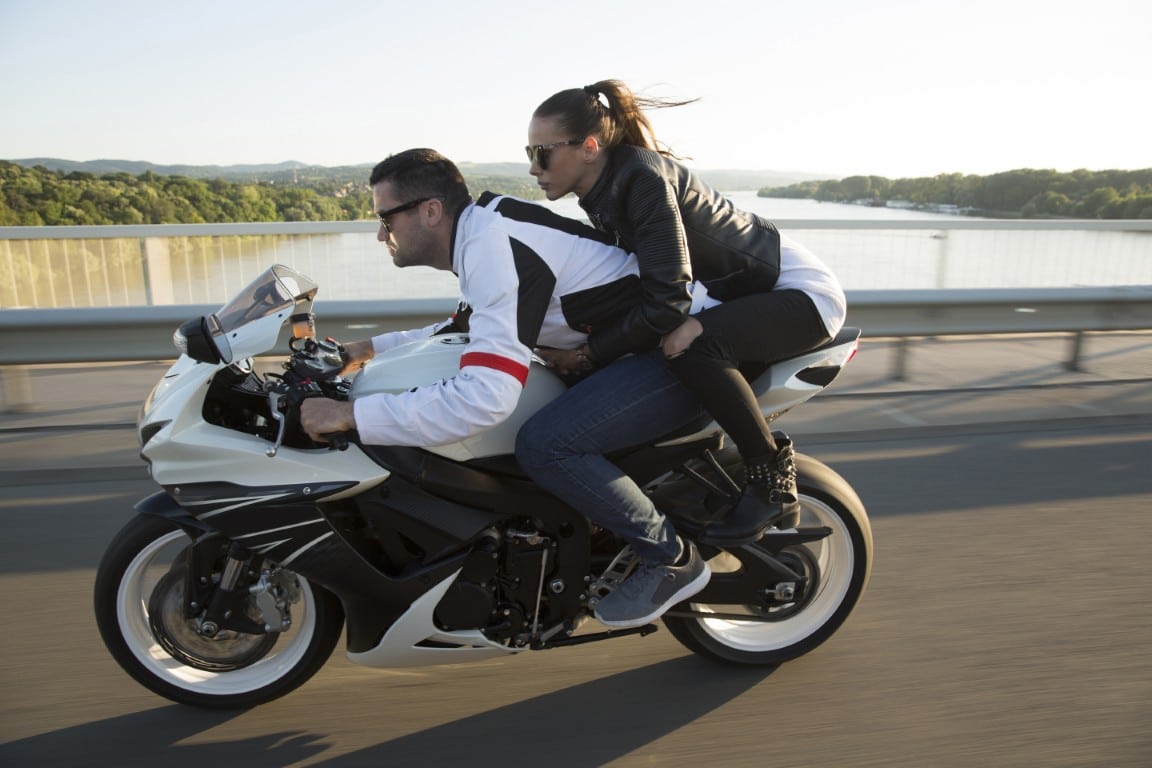
The first corner tells you everything. A solo bike carves it cleanly; add a second person and the same input gets a slower, heavier response. If you’ve been wondering how to ride with a passenger on a motorcycle, the short answer is that it isn’t complicated, but it requires real preparation: changes to the machine, a clear conversation with whoever is climbing on, and a different approach to the road ahead.
Two up riding shifts the center of gravity rearward. The front wheel carries less load, which lightens the steering and reduces how much grip the front end has available. Low-speed work, including U-turns, slow-speed filtering, and parking lot maneuvers, feels heavier and needs more deliberate input than usual. Cornering response slows down noticeably.
Braking is where it matters most. Greater combined weight means more distance to stop. Riders carrying a passenger for the first time often find their usual reference points, the spot they’d start braking for a red light or a tight turn, aren’t far enough back. The habit to build is looking further ahead and initiating stops earlier. That single adjustment does more for safety than almost anything else when riding a motorcycle with a passenger.
Rear suspension is the first thing to address. Without adjustment, the extra load compresses the rear spring past its intended range, which throws off the front-to-rear balance and changes how the whole machine responds. Most motorcycles have a preload adjuster on the rear shock, and increasing it raises the ride height back toward where it belongs with two people aboard. The target with both riders seated is around 30 to 35mm of laden sag.
If the rear has been riding low under combined weight for a while, or if the suspension has been showing warning signs before any adjustment, having it checked over before the next outing is worth the time. A professional suspension inspection can catch problems that are easy to miss until they become a real issue on the road.
Tire pressure should come up slightly as well. Check the owner’s manual for the recommended two-up figure, which is typically a few PSI above the solo setting. Adjust the mirrors last, with both of you seated in your actual positions, since posture changes when someone is behind you.
Motorcycle passenger footpegs are load-bearing points, not just somewhere to rest the feet. When someone reaches for the ground instinctively as the machine slows, it throws unexpected weight to one side at exactly the wrong moment.
Where the person behind you sits on the seat matters too. Someone perched toward the tail amplifies the rearward weight problem and sits high enough to shift the handling noticeably. They should stay close to the person up front, with their own weight centered over the footpegs rather than hanging off the back.
Most people getting on a motorcycle for the first time have no frame of reference for riding pillion. There’s nothing intuitive about it. Run through these points before moving:
Knowing how to be a good motorcycle passenger means being an active participant in the ride, not just cargo. A co-rider who understands what’s being managed up front makes the whole experience smoother for both of them.
Anyone on the back of a motorcycle hits the pavement at speed exactly the same way the person in front does. Full gear applies to everyone aboard, without exception.
That means a helmet that fits properly. Full-face coverage is the most protective option, and fit matters more than price point. A jacket with armor at the shoulders, elbows, and back. Over-the-ankle boots, since the ankle has almost no natural protection in a tip-over without them. Gloves with reinforced palms. Riding pants with knee and hip protection, not regular jeans or casual clothes.
Gear that shifts during a fall doesn’t protect. Picking up properly fitted passenger gear before the first ride together is worth far more than figuring it out after the fact.
Motorcycle passenger tips often get treated as a formality, something to nod through before heading out. The preparation is what makes the ride worth having, whether it’s a quick run across town or a longer trip planned out over several days. Get the setup right, brief whoever is riding with you, sort the gear for both, and the road does the rest.

