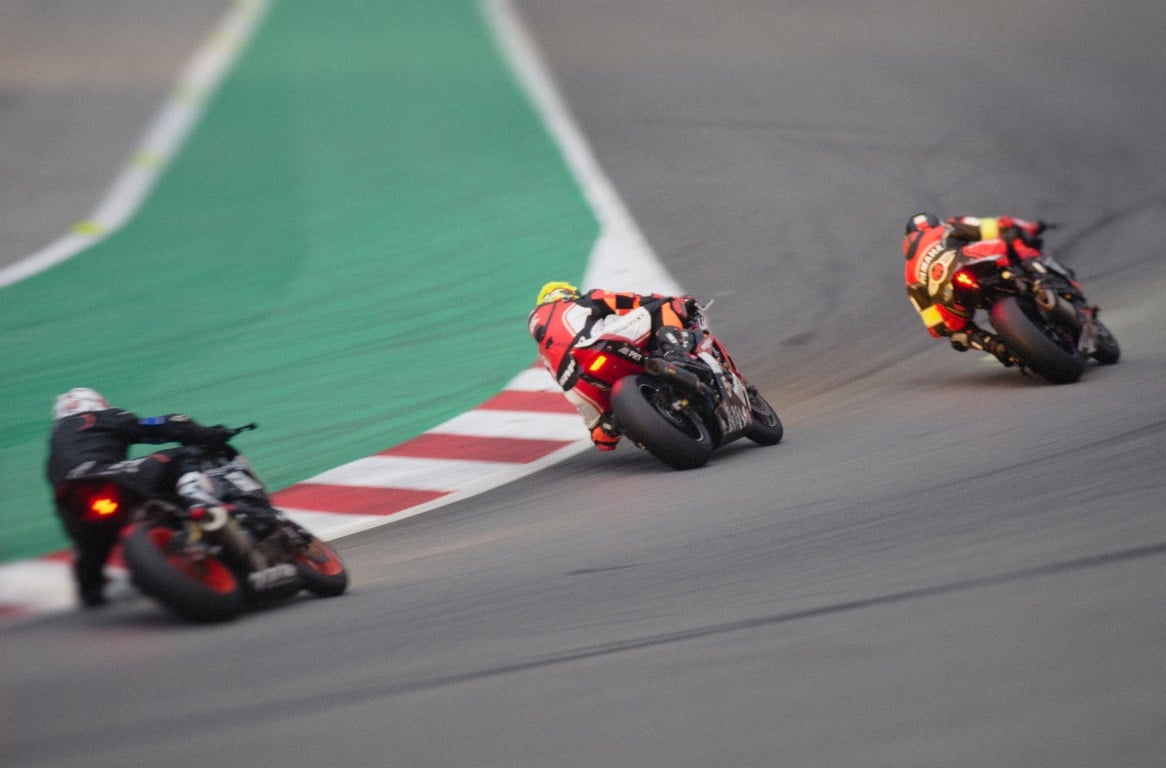
A track day is not a fast street ride. The speeds are higher, the braking is harder, and the bike takes more stress in two hours than it might in two months of normal use. Showing up with a road-ready bike and assuming it will hold up is how people end up stranded in the paddock. Getting the prep right ahead of time makes the day safer and lets you focus on riding rather than worrying about the machine under you.
Most organized track days run a tech inspection before you’re allowed on the circuit. The specifics vary by organizer, but the common items are consistent: brake function front and rear, no fluid leaks, throttle snapping back cleanly, controls operating without binding, tires in good condition, and mirrors removed or taped. Some events also call for safety wire on the oil drain plug and filter to keep oil off the asphalt surface in case of a mechanical failure. Find out what your organizer requires beforehand and don’t count on passing inspection with a bike that hasn’t been properly checked. Of all the items on that list, the brakes deserve the most attention.
Brake fluid absorbs moisture over time, and moisture lowers its boiling point. In everyday use, this rarely matters. On track, where you’re braking hard from high speed repeatedly over hours, degraded brake fluid boils in the lines and produces a spongy lever with reduced stopping power. Fresh DOT 4 before a racing day is not optional.
Pad life matters too. Road pads wear faster under track conditions and some compounds aren’t designed for repeated high-heat use. Inspect your remaining pad thickness and consider whether your current compound can handle the heat and pace. If there’s any doubt, fresh pads are cheap compared to what happens without them.
Tires need to be free of cracking, have sufficient tread depth, and ideally be a sport compound rather than a touring option. Cold pressures at the track are typically lower than what you’d run on the road. Lower pressure increases the contact patch, but the exact number depends on the rubber and conditions. Follow the manufacturer’s recommendations and adjust from there rather than defaulting to road pressures.
Beyond that: confirm your oil level, look for any coolant or fuel leaks, and make sure your chain tension and sprocket condition are in order. A chain that’s borderline acceptable in normal use can become a problem at sustained high RPM. If your bike hasn’t had a full service recently, a pre-track inspection makes sense before you load it on the trailer.
Alongside those mechanical checks, many circuits also require a few physical changes to the bike. Most tracks require mirrors to be removed or covered. Headlights and turn signals are typically taped over to contain glass in the event of a tip-over. Remove or secure any loose items, including tank bags and anything attached with straps. Some organizers ask for coolant to be replaced with water to reduce track contamination if you go down. Look up the rules for your specific event, since requirements differ between track day operators and race organizations.
With the bike sorted mechanically and any required modifications done, the only thing left is picking where to go. The Chicago area has solid options within driving distance, from a quick day trip to a proper weekend away. All three divide participants into separate ability groups, so you don’t need to be a fast rider to get on track.
Your first time will feel nothing like riding on public roads. The corners come faster, the braking zones are shorter, and the whole experience recalibrates how you think about your bike. Most people leave wanting to go back. Do the work beforehand and that first session is spent learning the course, not babysitting the machine.

