Lake Michigan looks inviting from the shore. On the water, it behaves like the ocean. Waves build fast, water temps run cold well into summer, and the hazards are real enough that going in unprepared is a bad idea on any first ride.
Illinois requires anyone born on or after January 1, 1998, to carry a Boater Education Card when operating a motorized watercraft. This applies whether you own the vessel or rent it for the day. The course is available online through the Illinois DNR, takes a few hours, and costs nothing. Most people don’t know it exists until they’re asked for it on the water.
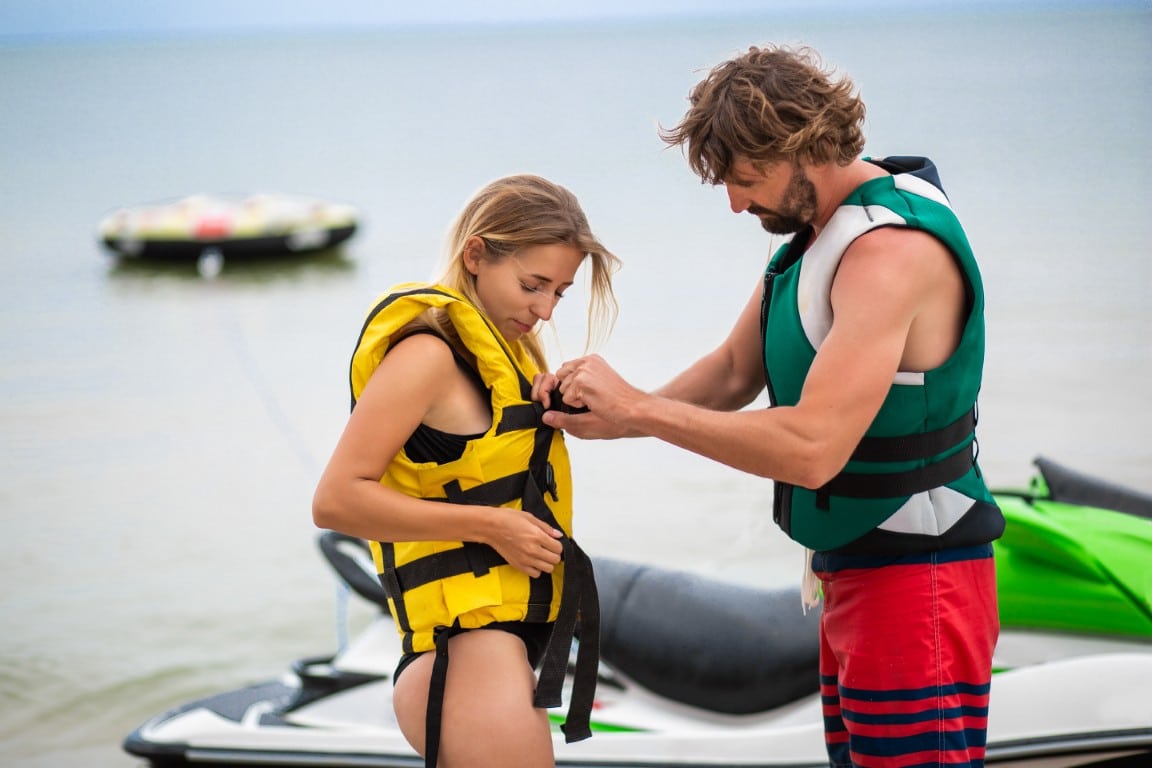
Age restrictions apply too. Riders under 12 cannot operate a PWC in Illinois at all. Between 12 and 17, you need the boater education course completed and must remain within 100 feet of a supervising adult on a separate vessel. Life jackets are required for every person on board, regardless of age, properly sized and worn, not stowed.
Boating under the influence carries the same legal consequences as a DUI, which surprises people who treat the lake as an informal setting. A 0.08 blood alcohol level is the limit, and Chicago’s lakefront gets actively patrolled in summer. Beyond the legal side, alcohol specifically impairs the balance and reaction time that PWC riding demands in ways most people underestimate.
Surface temps near Chicago typically reach the mid-60s by July. That sounds reasonable until you end up in the water without expecting it. Cold water shock hits fast and affects your breathing before you’ve had a chance to react. First-timers should keep close to shore until the PWC feels natural under them.
Weather is the other factor most inland operators misjudge.
A calm morning on Lake Michigan can turn into steady two-foot waves by early afternoon, especially when afternoon winds build across the lake. What looks like a small chop from shore feels much different from the seat of a PWC. After twenty or thirty minutes, the repeated impact of waves can become surprisingly tiring, especially when conditions continue building throughout the afternoon. Check the National Weather Service marine forecast before launching, and treat a lightning warning as a hard stop, not a suggestion.
Commercial freighters and charter vessels share the lake with everyone else. Large boats have limited ability to stop or maneuver, and at low profile on a PWC, you are harder to spot than you think. Give commercial traffic a wide berth, and treat right-of-way as your responsibility rather than waiting to see what the other vessel does.
Two things experienced riders never skip: checking the drain plug and attaching the kill switch lanyard to their wrist. The drain plug gets missed more often than it should, and a PWC without one sinks before it reaches open water. The lanyard cuts the engine if you go overboard, stopping it from running loose. Both take ten seconds and both get skipped by first-timers eager to get moving.
The throttle response surprises almost everyone on an early ride. What feels like a gentle squeeze produces immediate acceleration, and finding the right touch usually takes a few minutes on open water before it starts to feel instinctive.
Confirm your fuel level before launching, and if the craft hasn’t been looked at since last season, a jet ski inspection can catch mechanical issues that won’t show up until you’re already out there. Tell someone your plan before you go: where you’re launching, where you’re headed, when you expect to return. And never ride alone when you’re still getting comfortable. If things go sideways, having another person nearby makes a real difference.
Once you’re moving, Illinois requires PWC operators to stay at least 200 feet from swimmers, dive flags, and non-motorized vessels. Near beaches and swim areas, slow down well before those boundaries. And if something goes genuinely wrong out there, the US Coast Guard is on VHF Channel 16 or 911. Know that before you need it.
It happens to almost everyone early on, usually at low speed and usually less dramatic than expected. The instinct is to swim away from the unit, but the right move is to stay near it. Most modern PWCs are designed to circle back toward the rider once the engine cuts. When you’re ready to re-board, use the rear swim platform. Climbing on from the side flips most PWCs. Get back on, take a breath, and scan your surroundings before restarting.
Lake Michigan is one of the better places in the Midwest to ride a PWC. Chicago’s lakefront puts it within reach, and the lake rewards people who take it seriously from the start.

