Picture yourself on the shoulder forty miles from anywhere, unpacking half your load because it shifted through the corners and the steering turned nervous.
Most new riders bring a backpacking instinct to the problem: buy the lightest, smallest version of everything and cram it on. But a motorcycle isn’t a backpack. A few extra ounces matter less here than packed size, weather resistance, durability, and where the load sits on the bike. Put too much weight high or behind the rear axle, and you can feel the difference in the steering.
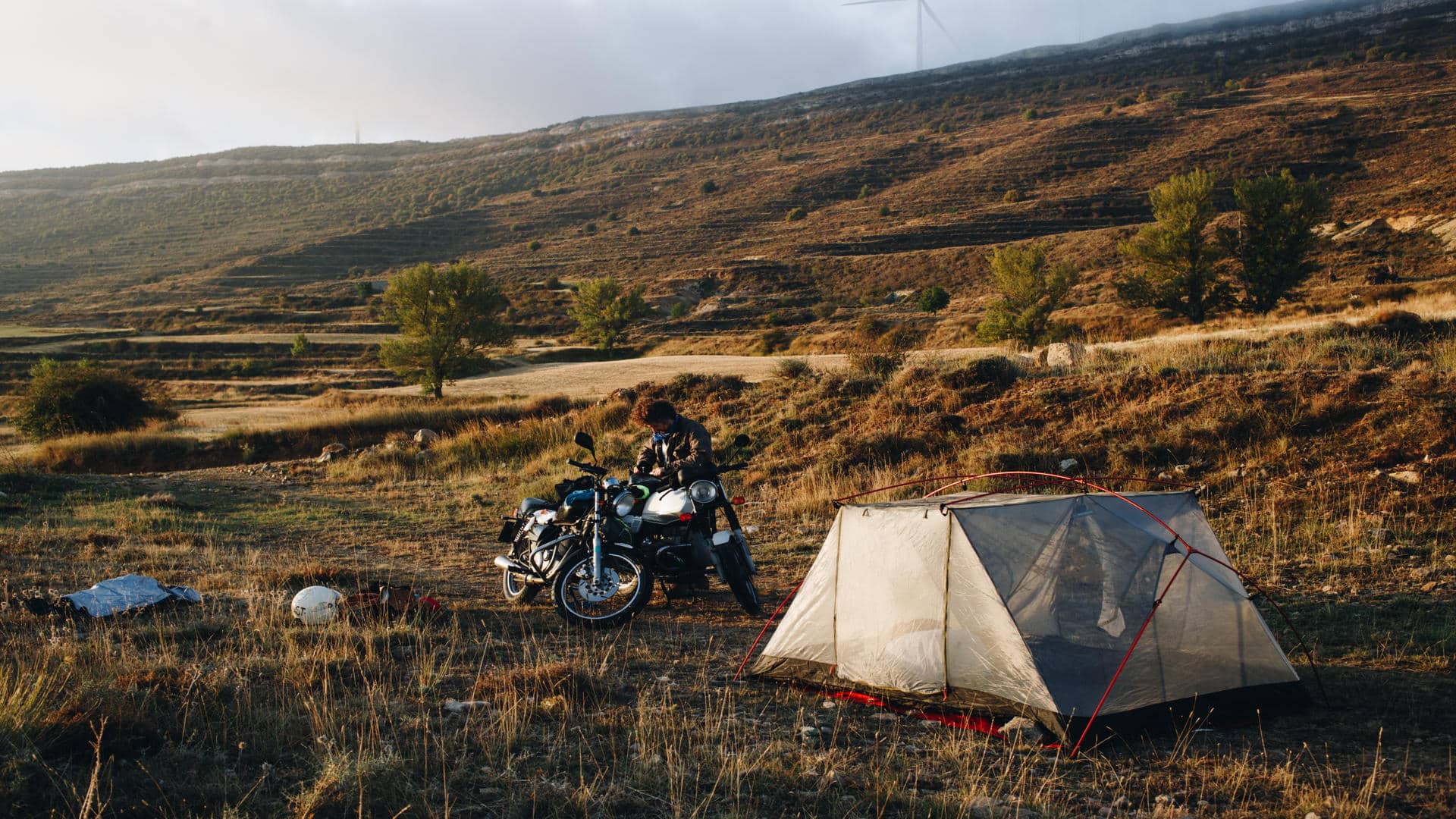
Your tent is the anchor of the entire load, usually the bulkiest thing you carry, so it deserves the most thought. Resist the urge to grab the cheapest ultralight hiking model. Those trade durability for grams, and a motorcycle trip exposes gear to wind and grit a backpacker never sees.
Look for a freestanding, double-wall design that pitches fast and packs down tight. A two-person rating gives a solo rider room to pull luggage inside, out of the weather. The features that matter most:
Practice putting it up in the backyard once. Fumbling with unfamiliar poles at dusk in the rain teaches you nothing you want to learn on the road.
Riders happily spend a fortune on a helmet, then try to sleep on a forty-dollar bag the size of a watermelon. Poor rest wrecks the next day’s riding, and a bulky bag forces you into bigger luggage. Spend where it counts.
Three pieces make up a solid sleep setup: a compact sleeping bag rated for the coldest night you expect, an insulated sleeping pad, and a small pillow. The pad matters more than people think, since it cushions the ground and blocks the cold rising up through it. For the bag, synthetic fill handles damp conditions better, while down packs smaller and lighter for dry trips. A stuff sack crammed with a jacket makes a serviceable pillow if you’d rather save the space.
A hot meal after a hard day in the saddle resets everything, and you don’t need much to make one. A compact canister stove is the simplest choice for most riders, lighting quickly and packing down to almost nothing. Pair it with a single pot, a spork, and a lighter, and you have coffee at dawn and a hot dinner at dusk covered.
Water is worth stashing where you can reach it, topped up whenever you get the chance. Anything else in the cook kit is a luxury, so add it only if the space is truly free.
Riders skimp on this category until the day they desperately need it. A breakdown in the backcountry is a very different problem than one across town, and help can be hours away. Carry enough to get yourself moving again.
A sensible kit covers the basics:
Sorting out any mechanical doubts at home beats finding them on the shoulder. The same fundamentals that go into preparing for a long-distance motorcycle trip apply here, whether you’re chasing a campsite or a hotel.
Weather on a multi-day trip rarely cooperates, so pack for range, not for every possibility at once. Base layers in merino wool or synthetic wick fast and resist odor across several days. Add a warm mid-layer and genuinely waterproof rain gear, tested at home rather than trusted blindly. A single set of clean, dry clothes for camp does wonders for morale.
Two numbers matter before loading the bike: its GVWR and its ready-to-ride weight. The difference gives you an approximate payload allowance for the rider, passenger, luggage, accessories, and anything else not already included in the manufacturer’s weight figure. Check the owner’s manual for exactly what the listed curb or wet weight includes, since definitions vary. Hard cases, racks, crash protection, tools, water, and camping equipment can consume that allowance surprisingly quickly.
Once the bike is loaded, two settings change. Check the owner’s manual or tire-pressure label for the manufacturer’s recommendation when carrying additional load; some motorcycles specify different pressures for heavier loads or two-up riding. Preload comes next: an extra forty or fifty pounds sinks the suspension into its travel, and adding preload helps restore the intended suspension sag as load increases. If you have to max the preload just to hold ride height, the springs are the real answer.
This is what sets motorcycle camping apart from every other kind. What you carry matters less than where you put it, because weight in the wrong spot turns a nimble bike into a handful.
The golden rule is simple: keep the heaviest items low and close to the bike’s center. High, rearward weight makes the front end feel light and vague at speed, exactly when you want confidence. A well-distributed load actually handles better than one big top box stuffed to the brim.
A few habits make loading painless:
Soft luggage flexes, sheds water, and mounts with little fuss, while hard cases lock and protect but add weight. For a solo weekend, a tail pack and a tank bag usually suffice, with throw-over saddlebags added when the load grows. When a bike lacks solid mounting points, custom racks and luggage mounts put the weight exactly where it should sit.
Strip it back and motorcycle camping asks for little: solid shelter, warm sleep, a way to cook, tools to get unstuck, and a smart way to carry it all. Everything beyond that is comfort, and comfort is welcome only when it fits.
Start minimal on your first trip and pay attention to what you actually reach for. You’ll quickly learn which items were worth the space and which rode along untouched. Then all that’s left is deciding where to point the bike, and there’s no shortage of good road out there waiting.

