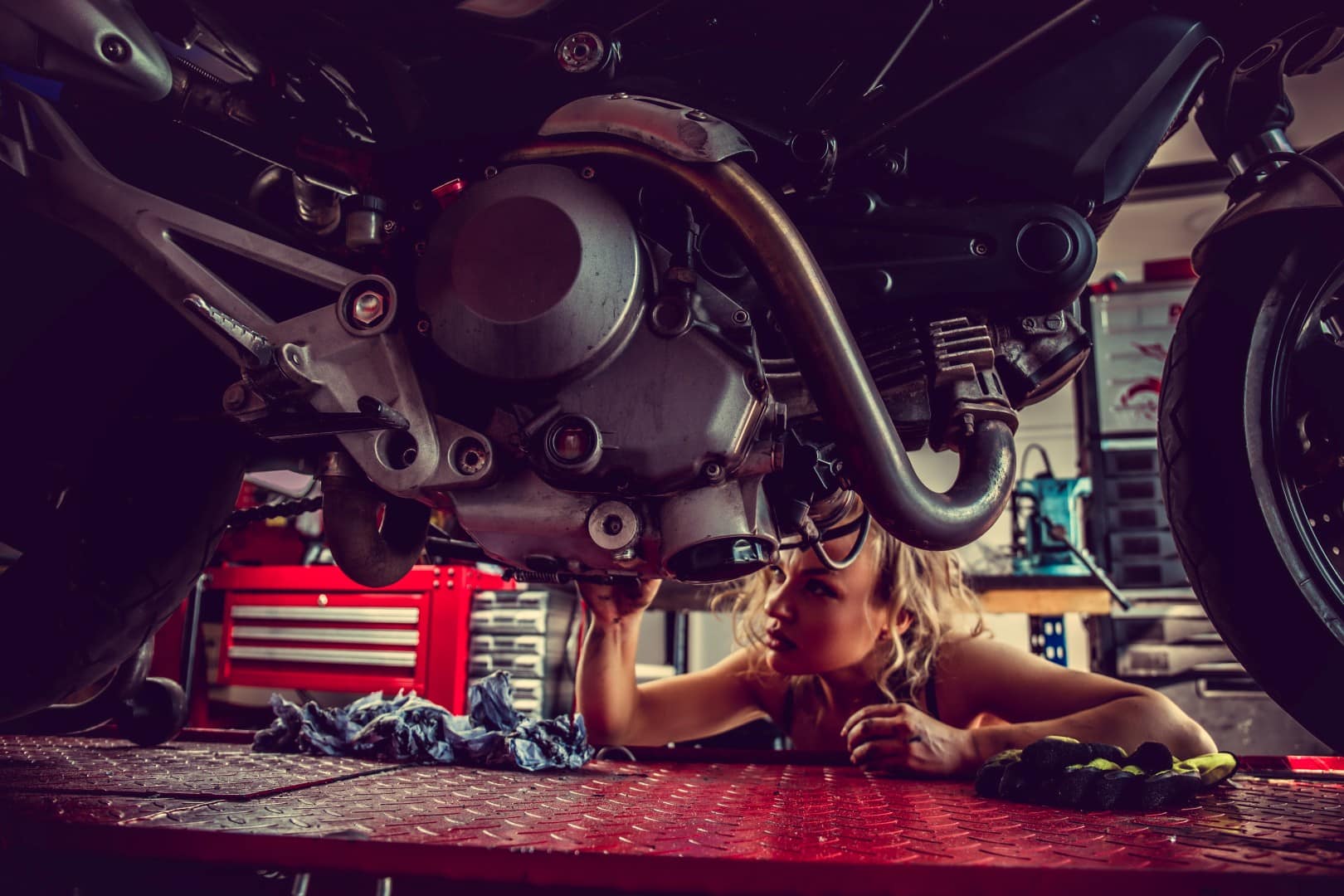
You walk out to the bike, look down, and there it is: a dark spot on the concrete. The first instinct is usually dread. The reality is that a motorcycle leaking oil doesn’t automatically mean you’re staring down an engine teardown. Sometimes it’s a loose drain plug. Sometimes it’s residue from a recent oil change that worked its way down the case. Location, rate, and timing are what will narrow this down.
Motorcycles carry several different fluids, and that puddle isn’t always what you think. Appearance alone won’t reliably tell you which one you’re looking at. Engine oil darkens and thickens with use; coolant fades from its original green or orange to a murky brown; brake fluid shifts from pale amber to dark and cloudy; fork oil looks much like engine oil once it’s been in service.
Fuel is thinner and evaporates quickly, so the spot may disappear before you can get a good look. On chain-driven bikes, accumulated chain lube and road grime can pool under the swingarm in ways that look like an engine leak.
Where the fluid shows up on the bike matters more than color or texture. A wet spot around the crankcase, filter, or drain plug points toward engine oil. That’s your starting assumption until something rules it out.
A wet spot around a fork leg is a different situation entirely. Forks hold their own oil, and when a seal or inner tube fails, that fluid sweats down the leg and drips from the lower tube. A fork seal is the most common suspect, but a scratched or corroded inner tube can cause the same leak even with a new seal. The same-looking puddle on the ground can mean a completely different system and a completely different repair.
Check your oil level first. A critically low reading means stop now. A normal reading tells you how much has already been lost, not how fast it’s going. Either way, it’s the first piece of information you need.
Next, find the highest visibly wet point on the engine, not the lowest. Oil travels downward, so the drip point on the ground may not be anywhere near where the leak started. A spot under the drain plug doesn’t mean the drain plug is leaking. It could be oil that migrated from a filter, cover, or gasket higher up on the engine.
Placing cardboard under the bike overnight helps narrow the zone. Compare where the drip lands against what sits directly above it on the engine, and work upward from there.
Then wipe the suspected area clean with a rag and run the engine briefly. Only do this if the oil level is adequate and no oil-pressure warning is showing. Look again while it’s warm. Fresh oil reappearing on a clean surface gives you a far more reliable starting point than tracing old residue.
Three of the most commonly reported post-service and age-related leak locations:
| Source | What to Check | The Fix |
| Drain plug | Sealing system type (crush washer, bonded washer, or O-ring), thread condition, torque | Replace washer per service manual spec; torque to spec. Never tighten harder, which strips threads or damages the crankcase |
| Oil filter | Double gasket (old rubber seal stuck on engine + new filter on top), installation torque | Remove filter, check the mounting surface, clear any stuck seal; for spin-on filters follow the filter packaging or manual spec; cartridge housing caps need a torque wrench and the manual figure |
| Valve cover | Condition and seating of the gasket, bolt torque pattern and sequence, sealing surface cleanliness; on some engines, RTV/liquid gasket compound | Reseat or replace gasket with correct bolt torque sequence; RTV joints need full removal, surface prep, and reseal |
The valve cover deserves a second look. Because it sits high, oil tracks down the fins and pools much lower, making the actual source easy to misread. Heat cycling, improper installation, and uneven bolt torque are all contributors to gasket failure. When the joint uses liquid gasket compound, modern RTV can still fail through poor surface prep, incorrect application, or age.
Yes. On many motorcycles, overfilling pushes oil out through the crankcase breather tube and into the airbox, showing up in unexpected places rather than as a classic drip. Verify your oil level using the manufacturer’s procedure for your specific model. That procedure varies: some require a warm engine, some cold, some specify the bike upright, others on the side stand. Don’t guess on this one.
It depends on what you’re actually looking at. A minor weep from a known location with a stable oil level is a different situation from an active drip with an unknown source. The question isn’t just whether oil is leaking; it’s whether you know where it’s coming from and how fast it’s moving.
Don’t ride if there’s active or significant leakage, the level is falling, an oil-pressure warning is on, or oil has reached the tires or brakes. Oil on a tire or brake rotor is a serious loss-of-control hazard. Oil on a hot exhaust adds smoke and, depending on where it lands, fire risk. A dropping level left unaddressed can lead to inadequate lubrication, and the damage that follows is the territory of motorcycle engine rebuilds, not a weekend fix.
| Where You See Oil | Where to Start Looking |
| Around the oil filter | Filter, seal/gasket, sealing surface, double gasket |
| Around the drain plug | Plug, sealing washer or O-ring, thread condition |
| High on the engine | Valve cover, nearby gaskets |
| Side of the engine | Clutch cover, stator cover, gaskets and seals |
| Under the engine | Trace upward; inspect drain plug, filter, and lower case joints |
| Around the fork legs | Likely fork oil; inspect fork seals first |
If two locations in the table match what you’re seeing, start with the higher one. Oil from a valve cover can drip onto the filter housing and make it look like a filter leak until you clean everything and run it again.
Some leaks are obvious once you know where to look. Others need eyes on the engine. If the area dries clean but oil keeps returning, or threads and sealing surfaces look damaged, get a proper inspection.
If you’re bringing the bike in, the diagnostic goes faster with specifics: where oil first appeared, how much you’ve lost, whether it shows up while parked or after a ride, and whether it started after a recent service. Chicago weather and road conditions can accelerate seal wear, so if the leak appeared after winter storage or a wet season, mention that too. Not all leaks become major jobs, but ignored ones can. If you’re not sure what you’re looking at, have it checked before guesswork costs more than the fix.

